
There is a widespread misconception that rosé wine is merely a byproduct or a casual blend of red and white grapes. In truth, creating a great rosé is one of the most delicate, precise, and demanding arts in winemaking.
The signature blush color—ranging from soft peach to vibrant coral—requires absolute mastery over time and extraction.
“A great rosé is not defined by chance;
it is born from the exact second a winemaker decides to separate the skins from the juice.”
The Craftsmanship Behind the Color
Unlike red wines, which ferment alongside grape skins for weeks to extract deep tannins and color, rosé wines demand extraordinary subtlety.
Through precise, brief skin contact (maceration) lasting anywhere from a few hours to a single night, the winemaker extracts delicate aromas, crisp acidity, and just a hint of pigment before pressing. It is a balancing act where a few minutes too long can alter the entire structure of the wine.
When combined with effervescence, this technique yields some of the most versatile and refreshing wines in the world.
Three Distinct Expressions of Sparkling Rosé
To explore the landscape of sparkling rosé, here are three exceptional expressions, ranging from hyper-local roots to international prestige:
- The Local Icon: Fortana Frizzante (Sabbie Ferraresi) Rooted in the unique sandy soil (terreno sabbioso) of the Ferrara coast, Fortana is a historic grape variety that delivers a vibrant, rustic elegance. Vinified as a rosé frizzante, it offers striking acidity, wild red berry notes, and a distinct mineral salinity shaped by the nearby sea. It is an authentic, unpretentious celebration of local terroir.
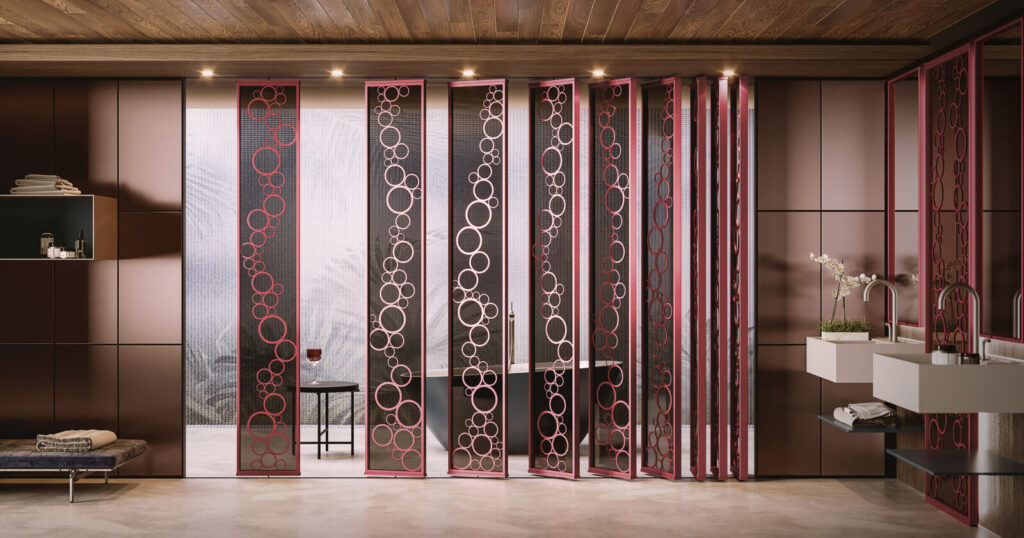
- The Italian Benchmark & Design Synergy: Franciacorta Rosé & LINVISIBILE Zefiro Representing the pinnacle of Italian bottle-fermented sparkling wine, Franciacorta Rosé (crafted predominantly from Pinot Nero) brings structure, complexity, and elegance. Fine perlage, notes of toasted brioche, and crisp red currant define its identity.This exact blend of understated luxury and fluid boundaries finds its architectural counterpart in LINVISIBILE’s Zefiro system. Designed as a vertical pivot room divider, Zefiro in its Franciacorta-inspired aesthetic embodies the same philosophy: separating spaces without creating hard barriers, allowing light, air, and sightlines to flow naturally.
- The Smart Alternative: Crémant vs. the Industrialization of Champagne While Champagne remains the undisputed global luxury icon, a critical look at the industry over the last 30 years raises an important question: How can production volumes increase so dramatically within the exact same geographic borders without impacting quality?Driven by global demand, mass Champagne production has often prioritized yield maximization and heavy cellar intervention. This is precisely where Crémant Rosé (whether from Loire or Alsace) shines. Crafted using the exact same traditional bottle-fermentation method, Crémant often represents a return to smaller-scale craftsmanship, remarkable freshness, and authentic value—a true connoisseur’s choice over industrial prestige.
The Philosophy of Choice
Whether honoring the identity of home with a glass of Fortana, appreciating spatial elegance with Franciacorta and architectural design, or making an educated choice with Crémant, sparkling rosé is a reminder that excellence is found in precision, detail, and critical thinking.
To explore how the Spritz fits into the broader heritage of Italian drinking culture, read our complete guide to Italian Spirits & Aperitivo Culture.