
By Paola Leo
AI is talked about as a revolution, on the assumption that it involves everyone and can benefit the many, going down in history as that other time when machines helped mankind. By alienating it. But AI was trained through the bosses’ gaze, not with the worker’s grit. That is why it can only pretend to be a tool of happy progress, of democracy, of solving society’s problems and ills, free of ethical and sociological consequences. AI’s efficiency is real, but its purpose is, once again, to optimise profit and concentrate capital.
The tool is in the hands of a few tech giants, whose CEOs are already proclaiming how dangerous it is. After handing out free, entry-level, addictive versions everywhere, of course. Enormous computing infrastructure and vast amounts of capital: what could possibly go wrong? Applied to the world of work, this technological power does not serve to free up workers’ time and give them back their human dimension, but to remind them how soon they can be replaced.
How will we stay human in the face of all this, while governments allocate public money, adopt centralised control strategies and issue AI regulations that always arrive too late?
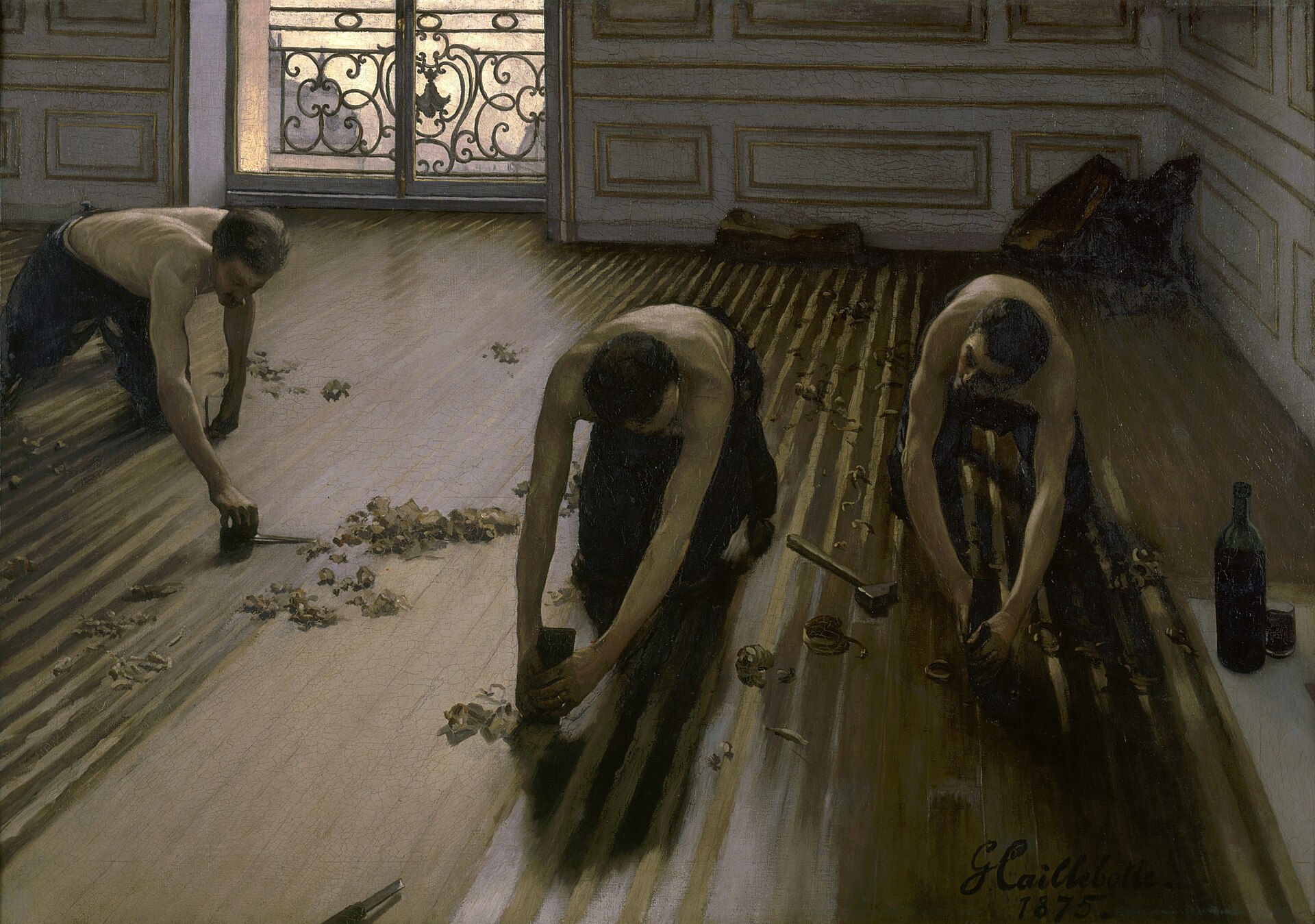
If many professions are going to stop being human, shouldn’t we already be thinking, with ruthless foresight, about investing in manual, craft and precision skills? In something that, at least for now, cannot be replaced?
AI now learns and trains on its own, swallowing and digesting content it had previously produced, in a kind of sad digital coprophagy. And this is not an early oversight that will be fixed over time. It is a structural flaw, deliberately engineered.
The usefulness of AI tools is often mistaken for the convenience of using them. And so, from fantastic aids, they quickly become skilful substitutes. The belief that people who love writing will struggle to hand everything over to AI, that the “romantics” of work will keep editing, developing, drawing and designing “by hand” without algorithms, is by now a nostalgic notion to be carried down to the cellar.
Not least because AI is everywhere, even in our relationship with ourselves. We question the machine to get to know ourselves; we desperately ask it for a formula to answer an irritating email, a goodbye message, a reproach we believe we don’t deserve. Even in friendship a doubt arises: will we have to learn to be better friends than our “smart twins”, always online and ready to satisfy every request?
The crux of the impact of AIs (the plural is a must here) on society lies in how we consult them. Their use is not only about automation, computing power, the ability to write or summarise a text, or to create a video or a presentation. AI also keeps us company, offering a chat with an always-on interlocutor who answers instantly. Think of a recipe; can I take Maalox on an empty stomach; how much sleep do I need not to go crazy; why is my colleague always sad; how can I make my son understand that you can’t always have everything; how do you count the calories in an apple?
We wanted imagination in power, and now that computing power has reached levels unthinkable even three years ago, we have built ourselves a Trojan horse of prompts that has already spawned the seeds capable of annihilating us. An age in which technology could overturn systems is instead seeing creativity flatten out until it disappears, reduced to reheated soup, refrozen and served again. Again and again. And of imagination not even the scent remains.
AI panders to whoever has the most expensive prompts, the most tireless obsession with communication, the most powerful propaganda. We generate, generate, generate, believing we are saving time, and meanwhile we feed in data, expose ourselves, strip ourselves bare. Governments, big tech, unbridled globalisation: there is no brake on the cynical processing of our lives. So we can get an algorithm to write an accurate text, yet we still have plastic in the sea, waste underground, space as a great unknown, and the planet’s health ever more compromised.
This is the great paradox of techno-capitalism: digital hyper-efficiency floating on real disaster. What matters, in the end, is accumulation.
Let’s monetise the disaster, get as rich as possible and not care about those left behind. At most we can toss them some crypto as we speed towards a resounding future. And then let’s be outraged and condemn riots, violence, ostracism, smashed shop windows, torn-out bins, defaced walls.
No technology is neutral. And nobody wants to be poor. Many, far too many, are, and they are fully aware that no technological or democratic tool can lift them out of that condition. So what use is AI to us?
Let’s make it a better tool for civic sense, for training, for culture, for high-quality schooling, to begin with. Let’s bring education where it is still a pipe dream, where it is scarce, where it is logistically or structurally hard to get anything beyond the bare official minimum.
Underpaid work remains underpaid even if AI makes it faster and less error-prone. A job can also be eliminated outright by AI. But education and civic-mindedness remain necessary to keep sustaining a society that, if not better, is at least open to the idea of becoming so. AI must be an act of improvement, and it can be: in work as in politics, in economics as in science, in engineering as in medicine, and so on across every field where every choice must, and can, be human, as an exercise of conscience.
About the author
Paola Leo · paolaleo.com · Instagram @rembartiana