
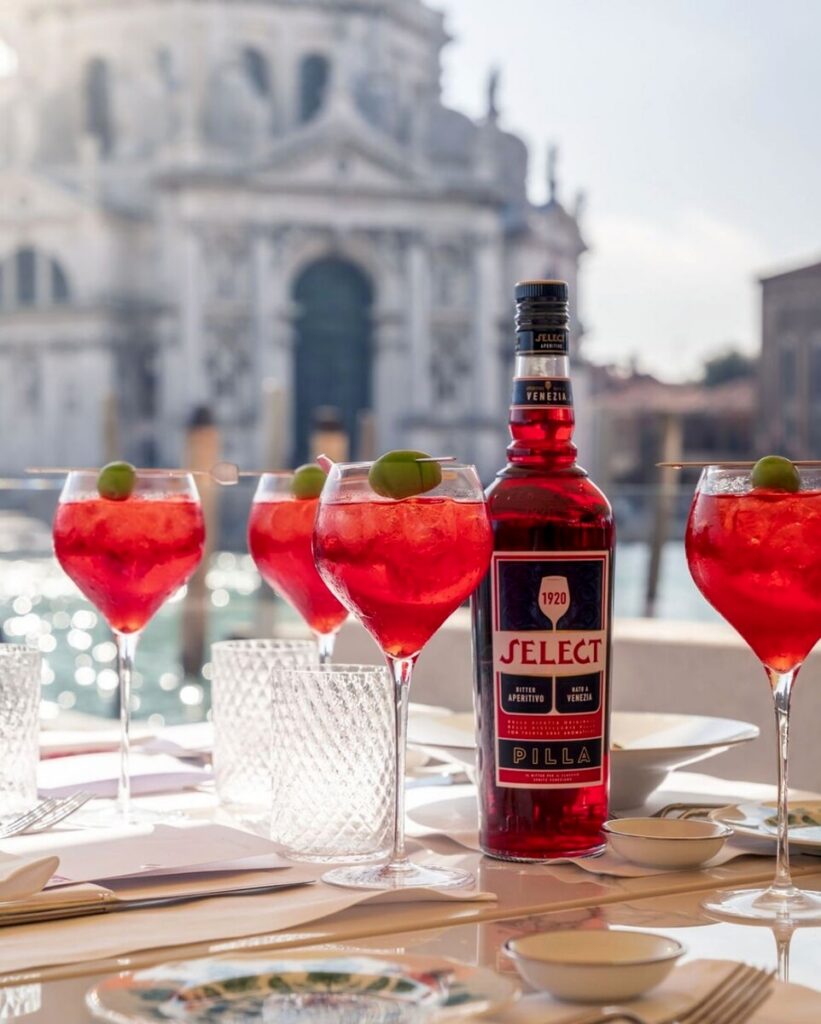
In a world that has standardized the Spritz into a hyper-sweet, mass-market phenomenon, returning to its true roots reveals a far richer narrative. The Spritz is not just a drink; it is an architectural balance of bitterness, salinity, and effervescence born in the heart of the Laguna.
Long before it became a global lifestyle trend on summer terraces, introducing this ritual to new cultures was an act of genuine mixology diplomacy.
“Sometimes, travel reveals that two distant worlds
were already connected long before you arrived to serve a drink.”
An Unexpected Connection: Almaty, 2001
I vividly recall back in 2001, when we organized a professional training course for bartenders in Almaty, Kazakhstan. Among the traditional international classics and spirits, we decided to introduce the authentic Italian Spritz.
At the time, the recipe was completely unknown in Central Asia. The local bartenders had never experienced that delicate interaction between herbal bitterness, wine, and seltz—and it became the absolute sensation of the training program.
During that exact trip, I discovered a fascinating historical connection: Almaty and Ferrara were twinned through apple cultivation. Almaty—whose name Alma-Ata translates to “Father of Apples”—is considered the ancestral birthplace of the apple, while Ferrara represents one of the premier fruit-growing regions of Italy. Standing thousands of miles from home, teaching a Venetian cocktail, I found myself connected back to the Ferrarese territory through an agricultural legacy.
The Original Anchor: Select and the Venetian Ritual
To understand why the Spritz works so well, one must start with its authentic icon: Select.
Created in 1920 in the Castello district of Venice, Select was crafted specifically to elevate local white wine into an impeccably balanced aperitivo. With its blend of 30 complex botanicals—including rhubarb roots and juniper—it delivers a rich, aromatic structure.
Crucially, the traditional Venetian recipe demands a green olive alongside a slice of orange: the natural salinity of the olive interacts with the herbal bitterness, creating a rounded balance rooted in the culture of the Venetian bacaro.
Exploring the Spectrum: Cynar, Aperol, and Campari
While Select represents the historical benchmark, the Spritz allows for personal expression through different bitter bases:
- Cynar: The Savory & Botanical AlternativeInfused with 13 herbs and plants—most famously artichoke leaves—Cynar brings a darker, earthy tone and lingering complexity.
- Aperol: The Light & Accessible ClassicSweet, citrusy, and gently bitter, it represents the modern, approachable gateway to the aperitivo—light and effortless.
- Campari: The Bold & Structured ChoiceIntense and uncompromisingly bitter, a Spritz made with Campari shifts the drink closer to classic cocktail territory, with pronounced notes of gentian and bitter orange.
The Geometry of Travel
Whether served at a historic Venetian bacaro or taught to ambitious young bartenders in Kazakhstan, the Spritz is far more than the sum of its ingredients. It is a reminder of how hospitality, territory, and shared rituals build bridges across the globe.
To explore how the Spritz fits into the broader heritage of Italian drinking culture, read our complete guide to Italian Spirits & Aperitivo Culture.
Pingback: The Architecture of the Italian Aperitivo: History & Rituals