
There is a profound threshold where physical endurance ends and pure character begins. That threshold is defined by 140.6 miles: a 3.8 km open-water swim, a 180 km bike leg, and a full 42.2 km marathon.
The Ironman is not an exercise in explosive intensity. It is an exercise in restraint, energy management, and psychological clarity. In a world obsessed with quick wins and short sprints, facing 140.6 miles demands a radical shift in perspective—where ego is the first casualty, and pacing is the ultimate virtue.
“An Ironman is not won in the moments you feel strong;
it is managed in the hours when your body asks you to stop, and your mind quietly refuses.”
The Anatomy of 140.6 Miles
Each phase of an Ironman tests a different layer of human resilience:
- The Open Water (3.8 km): Chaos and OrientationSwarming among hundreds of athletes in open water means confronting physical contact, murky visibility, and zero landmarks. Success requires finding a rhythm amidst commotion, staying composed when oxygen feels scarce, and trusting your line.
- The Saddle (180 km): The Science of RestraintThe bike leg is where races are quietly ruined. For 180 kilometers, the temptation to push hard on climbs or chase riders ahead is constant. But every extra watt burned on the pedals is a tax levied with interest during the marathon. It is an unyielding lesson in metabolic discipline.
- The Pavement (42.2 km): The Unvarnished TruthComing off the bike onto fatigued legs to run a full marathon is where the race truly begins. Beyond kilometer 30, mechanical momentum fades, and the competition turns purely internal. It becomes a quiet, methodical dialogue between focus and exhaustion.
Personal Memories from the Course
1. 2016: Looking Within
I completed my first and only Ironman back in 2016. It was an incredible, transformative experience—a day that forced me to look inside myself with a level of clarity I had never experienced before.
When you are out there for hours, stripped of daily distractions and executive routines, you meet your true self: your limits, your fears, and your quiet determination. It left a mark so deep that, even today, the thought of lining up at the start line once more continues to call to me.
2. 2025: On the Other Side with Francesco
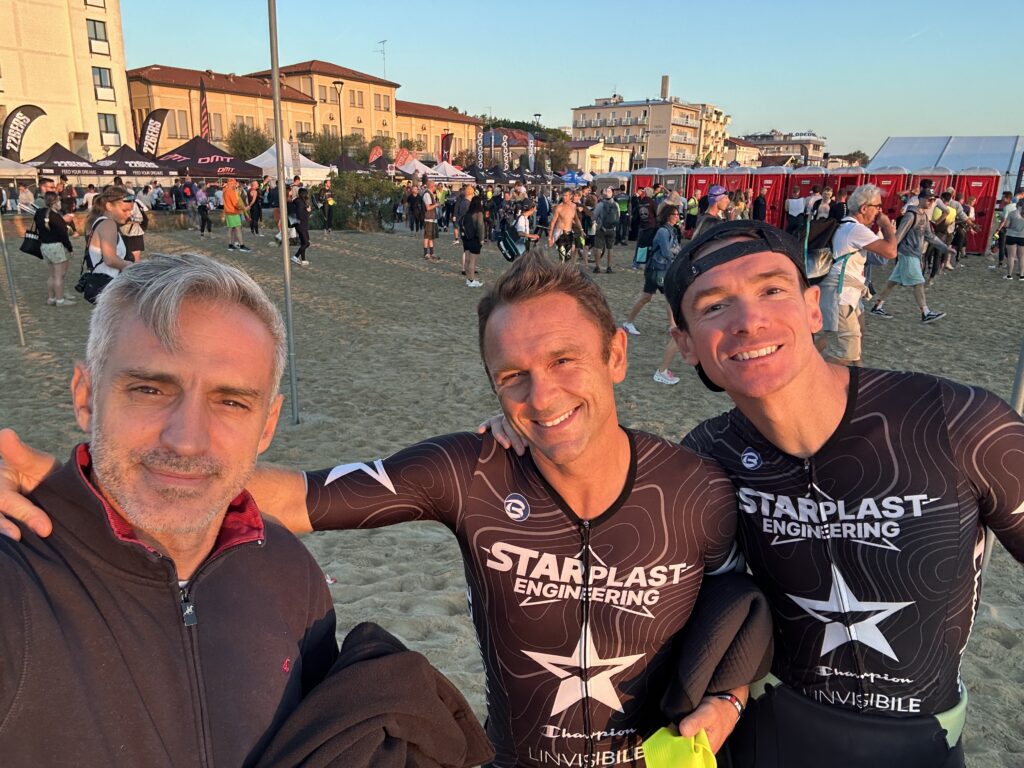
Nine years later, in 2025, I had the privilege of experiencing the Ironman from a completely different perspective: supporting my close friend and business partner, Francesco Rigo, as he tackled his very first 140.6-mile race.
I hold an indelible memory of that entire day. From the tension at the early morning swim start to the fleeting, high-adrenaline glimpses of him at the end of the swim and bike transitions.
The most powerful moments came during the marathon. Running alongside him at key points to hand over energy bars, hydration, and steady motivation, watching him fight through the dark miles, was extraordinary. And then came the finish carpet—an incredible emotional culmination of months of shared discipline, proving that the finish line belongs just as much to brotherhood as it does to athletic effort.
The Pacing Principles: From the Course to Executive Life
The rules that keep an athlete moving toward the finish line after ten or twelve hours of continuous output are the exact same principles that sustain long-term professional projects and strategic vision:
- Ego Management: Going too fast early feels heroic, but the marathon always collects its debt. Sustainable output requires respecting personal thresholds over short-term impulse.
- Managing the Micro-Crises: Over 140.6 miles, dark moments are guaranteed—nutrition issues, muscle cramping, mental fatigue. The discipline lies in remaining calm, adjusting the strategy, and knowing that every storm passes if you keep moving forward.
- The Power of Support: No great achievement is entirely solitary. Having someone at your side during the hardest kilometers to hand you what you need—whether a nutrition bar or a moment of perspective—makes the impossible achievable.
Crossing the Carpet
Crossing the finish carpet of an Ironman is not a victory over other competitors; it is the realization of what happens when preparation, loyalty, and quiet determination align over a long distance. Whether looking back at my own journey in 2016 or watching Francesco cross that arch in 2025, one truth remains: the distance never lies, and the long game is always worth playing.