
Listening suggestion:
Pizza is far more than a global comfort food; it is an architectural discipline governed by time, hydration, heat, and memory. While consumed in nearly every corner of the world, its true soul remains anchored in Italian craftsmanship—where a simple disc of dough becomes a canvas for regional identity, technical mastery, and lifelong human connections.
“A great pizza requires no disguise.
When the dough, heat, and ingredients are in perfect alignment, perfection is found in simplicity.”
The Roots: From Neapolitan Necessity to Cultural Legacy
The origin of modern pizza is inextricably linked to the vibrant streets of 18th-century Naples. Initially conceived as a quick, affordable meal for the working class, it evolved into a masterclass in elemental cooking.
The watershed moment arrived in 1889, when pizzaiolo Raffaele Esposito created the iconic Margherita—combining tomato, mozzarella, and fresh basil to mirror the colors of the Italian flag in honor of Queen Margherita of Savoy. What began as humble street food transformed into a UNESCO-recognized intangible cultural heritage, establishing Naples as the undisputed spiritual capital of the craft.
The Two Great Schools: Neapolitan vs. Roman
Understanding Italian pizza requires navigating two distinct technical traditions:
- The Neapolitan School (Soft & Elevated):
- The Dough: High hydration, long fermentation, baked rapidly in a wood-fired oven at high temperatures (around 450°C–480°C) for just 60 to 90 seconds.
- The Structure: Characterized by a high, airy, and soft border (cornicione) with a tender, foldable center.
- The Profile: Elastic, fragrant, and heavily focused on the moisture of fresh fior di latte or buffalo mozzarella and San Marzano tomatoes.
- The Roman School (Thin & Crisp):
- The Dough: Rolled thinner, often with a slight addition of olive oil in the mix to enhance crispness, baked at slightly lower temperatures for a longer duration.
- The Structure: Extremely thin, light, and satisfyingly rigid—known locally as scrocchiarella for the distinct crunch it yields with every bite.
- The Profile: Low moisture, highly digestible, and designed to support toppings without losing its structural integrity.
Pairings: The Purity of the Margherita
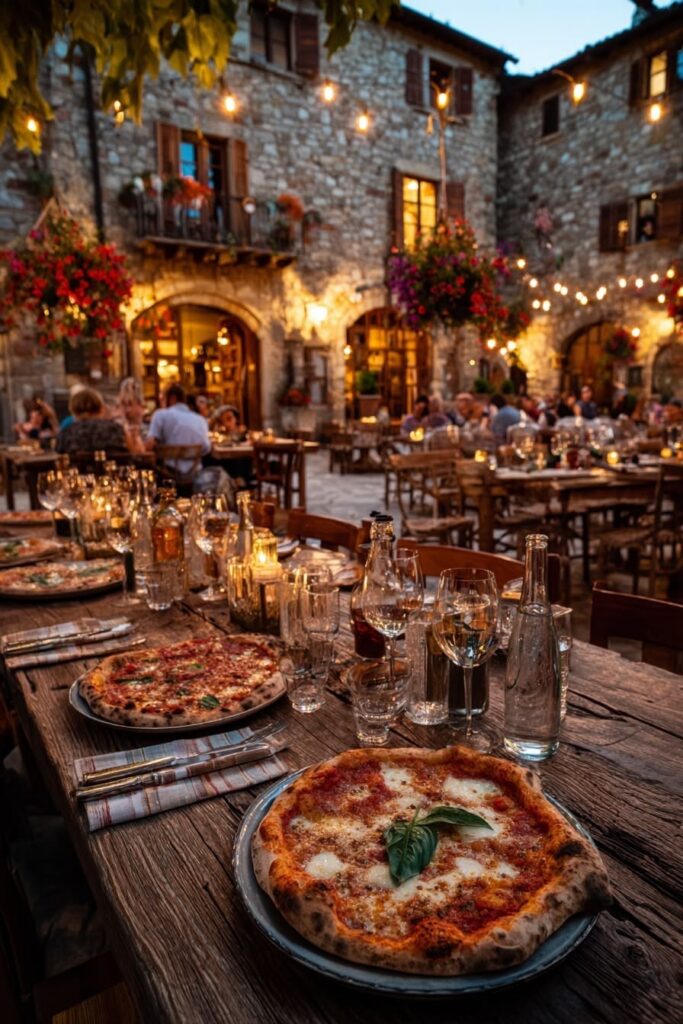
While modern menus often overload pizza with complex toppings, the true test of any pizzaiolo remains the classic Margherita. The people I love most eat their pizza strictly this way—and for good reason. The balance of sweet tomato acidity, creamy mozzarella, aromatic basil, and a touch of extra virgin olive oil allows nowhere for flawed dough to hide.
When pairing a Margherita:
- The Traditionalist: A cold, crisp Italian lager or pilsner cuts through the creaminess of the cheese while respecting the acidity of the tomato.
- The Terroir Connection: A lightly sparkling, dry red or rosé—such as a local Fortana Frizzante—provides effervescence and acidity that cleanses the palate after every bite.
Personal Reflections: Fire, Time, and Brotherhood
1. The First Flame: Ferrara, 14 Years Old
My own relationship with pizza began at the age of 14 during my earliest days of working in hospitality. While training at a well-known establishment in the province of Ferrara, I had the privilege of serving as an assistant pizzaiolo.
It was a trial by fire. I was taught how to knead the dough, stretch the discs by hand, prepare the toppings, and manage a wood-fired oven—because to this day, I believe a real pizza must be cooked strictly and exclusively over real wood fire.
More than thirty years later, fate brought me face-to-face with the very pizzaiolo who first taught me how to handle the peel and read the flames. Meeting him after three decades was a profoundly touching moment—a quiet realization of how those early lessons in discipline and hard work shaped everything that followed.
2. The Master of the Craft: Fabrizio and La Pizzaccia
I am fortunate to count among my closest brothers an extraordinary master of the trade: Fabrizio. A professional instructor for pizzaioli and chefs, as well as a national acrobatic pizza champion, Fabrizio approaches dough not just as a recipe, but as a science and an art form.
At his pizzeria in Ferrara, La Pizzaccia, he crafts what both I and the people I hold dearest consider the finest pizza in existence. Sitting at his table is not merely a night out; it is an annual pilgrimage to quality, long fermentation, and authentic friendship. It proves that behind every legendary bite is a human being who dedicated their life to mastering the craft.
The Lesson of the Table
Whether honoring the soft heritage of Naples or enjoying the crisp perfection of a Margherita at La Pizzaccia, pizza reminds us of what matters most: raw craftsmanship, wood-fired authenticity, and the joy of sharing a table with those we love.
To explore how pizza’s culture fits into the broader philosophy of the Italian table, read our complete guide to The Soul of Italian Cuisine: Essential Ingredients, Heritage, and the Art of the Table