
The Soul of Italian Pasta: Simplicity, Tradition, and Shared Tables
I have a confession to make: I don’t really know how to cook. My usual relationship with the kitchen can be summarized in a simple phrase: “I just dirty the dishes.”
And yet, there is one major exception to this rule—a culinary domain that captured my curiosity and converted me into a passionate practitioner: traditional Italian pasta.
(To be fair, pizza is another absolute pillar of Italian culture that holds a special place in my heart—and I am fortunate enough to have a great friend, Fabrizio, whose pizzeria, La Pizzaccia, serves hands-down the best pizza I have ever eaten. But that is another story for another time.)
“Great pasta doesn’t rely on complexity;
it demands respect for tradition, precise timing, and good company.”
The Roman School: Lessons from Alessandra
My passion for pasta wasn’t born in a cooking academy, but in a warm home kitchen, thanks to a wonderful person: Alessandra, the wife of my dear friend and business partner Fulvio Lanari.
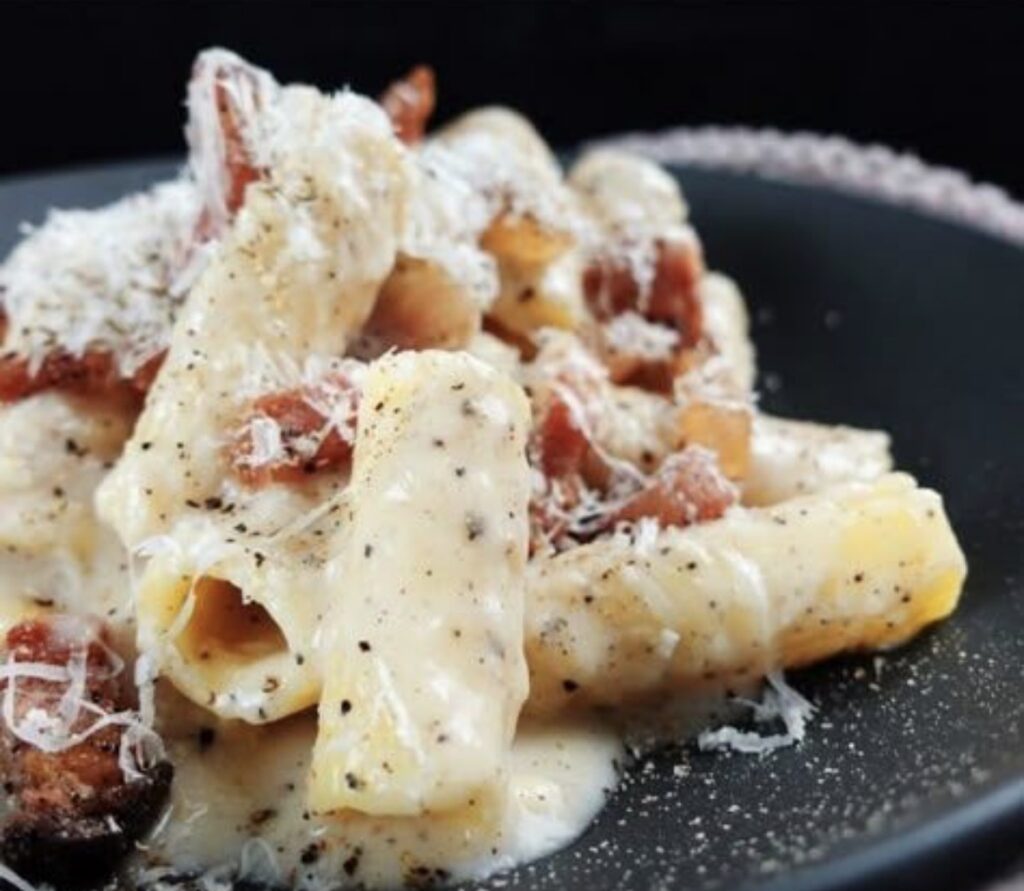
Being Roman, Alessandra passed on to me not just recipes, but the genuine culture behind the absolute pillars of Roman cuisine: la Carbonara, l’Amatriciana, and la Gricia.
These dishes are a masterclass in Italian minimalism. They rely on very few, high-quality ingredients—guanciale, Pecorino Romano, black pepper, pasta, and tomatoes for the Amatriciana. There are no shortcuts and no unnecessary additions. It is a ritual of patience, creaming (mantecatura), and respecting the essence of raw materials.
The Icon of Italian Culture and Bella Vita
Pasta is far more than an ingredient or a meal. It is an ambassador of Italian heritage, a symbol of Made in Italy, and a cornerstone of the bella vita.
It represents an architecture of taste where simplicity achieves perfection. Across generations, pasta has remained the universal language of Italian hospitality—a gesture that welcomes guests and transforms any table into a place of belonging.
From Sunday Family Lunches to Midnight Spaghettate
What makes a plate of pasta truly magical is its extraordinary versatility.
It holds a sacred place at the center of formal Sunday family lunches, served on crisp tablecloths with generations gathered around. Yet, it is equally at home in the spontaneous midnight dinners (le spaghettate di mezzanotte) thrown together with close friends after a long evening, where a boiling pot of water and a few humble ingredients create unforgettable memories.
In the end, learning to prepare a proper Carbonara or Gricia taught me that true luxury isn’t about overcomplicating things—it’s about mastering the essentials and sharing them with the people who matter.
To understand how Roman pasta fits into the broader philosophy of Italian gastronomy, read our complete guide to The Soul of Italian Cuisine: Essential Ingredients, Heritage, and the Art of the Table.
Pingback: The Soul of Italian Cuisine: Ingredients, Heritage & The Table