
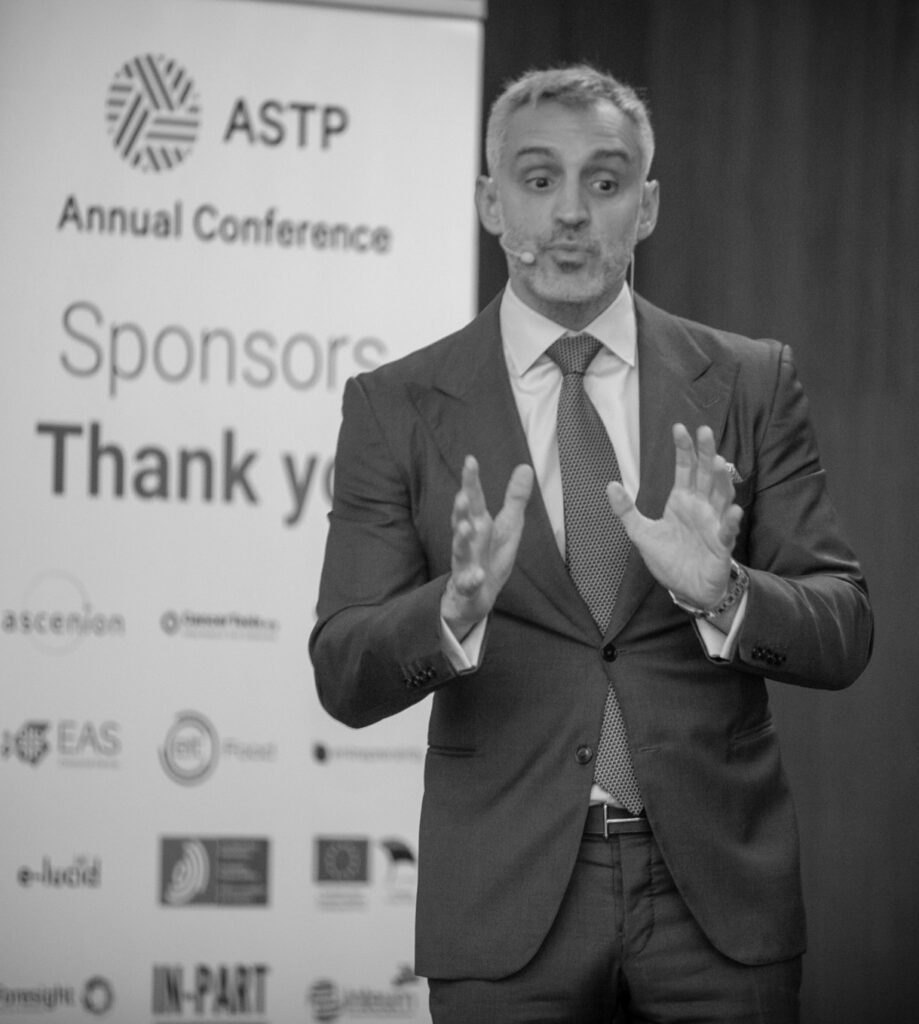
Public speaking is rarely a test of vocabulary; it is a test of presence. When standing before an audience—whether a room of senior executives or a diverse cohort of university students—the words you speak account for only a fraction of the impact. The rest lies in the architecture of your presence.
In the training methodologies developed at JTC School, we treat public speaking not as a performance of memorized scripts, but as an embodied exercise in authentic communication and spatial awareness.
1. Occupying the Space
Uncertainty makes us shrink. When speakers feel anxious, they instinctively minimize their physical footprint: crossing legs, tucking arms, or pacing nervously.
- The Physical Anchor: True presence begins with posture. Grounding your feet, opening your chest, and allowing your spine to stay aligned creates a natural posture of composure. Before you speak a single word, your body signals stability to the room.
2. The Art of the Strategic Pause
Inexperienced speakers fear silence. They fill every micro-second with filler words (“um,” “ah,” “so”), treating silence as an error.
- Owning the Silence: A strategic pause is a tool of authority. It gives your audience time to absorb complex ideas and gives you time to calibrate your next thought. Silence is not empty space; it is where emphasis lives.
3. Calibrating to Heterogeneous Audiences
A common trap is delivering a rigid, one-size-fits-all speech. High-impact communication requires real-time calibration.
- Reading the Room: Public speaking is a two-way dialogue, even when only one person is talking. Observe eye contact, micro-expressions, and energy shifts. Adjust your pacing, tone, and metaphors to match the audience’s receptive state.
Executive Action Item: The Pre-Speech Ritual
Before your next presentation, spend two minutes focusing on three physical checks: Grounding (feel your feet on the floor), Alignment (lengthen your spine), and Breathing (deep diaphragmatic breaths). Presence is physical before it becomes vocal.